
Cluster Pays or Traditional Reels? A Practical Slot Comparison

Choosing between a cluster-pays slot and a conventional reels game starts with understanding how wins are created, not just how attractive the artwork looks. Sugar Rush is a useful example because it combines a 7×7 grid, cascading symbols and expanding multipliers in one format. The game is described at http://jetbeaver.net/, but players should still check the information screen supplied by the casino hosting it. That screen can show the applicable RTP setting and the rules that apply on the particular platform.
How does a cluster-pays grid differ from paylines?
A traditional slot usually presents several horizontal paylines across a row of reels. The player selects a stake, spins the reels and checks whether matching symbols appear in the required positions. A cluster-pays game works differently: matching symbols need to form a connected group, commonly through horizontal or vertical contact, rather than landing on a predefined line.
On the 7×7 grid used here, a winning cluster contains at least five matching symbols. The symbols do not need to occupy one straight row, so a connected shape can spread across the board. This creates a more open-ended visual pattern than a standard three-reel or five-reel layout. It also means that the number and arrangement of symbols matter as much as their individual position.

After a winning group is settled, those symbols disappear and others fall into the empty spaces. This cascading process, often called a tumble, can create additional clusters during the same paid spin. One spin may therefore contain several separate winning events, although that does not change the underlying stake or make a result more predictable. The attraction is the changing grid, while the practical trade-off is that outcomes can be less intuitive for anyone accustomed to fixed paylines.
What happens during a cascade?
The cascade begins when five or more matching symbols connect. The winning symbols are removed, and replacement symbols enter from above. If the new arrangement creates another qualifying cluster, it is evaluated as part of the same tumble sequence. This continues until no further winning group is formed, so a single spin can resolve through multiple stages.
Marked positions add another layer. When a winning symbol disappears, its location can be marked. If a later winning symbol lands on that position during the same base-game sequence, a multiplier may apply to the relevant win. The multiplier can rise from 2×, with reported increases reaching as high as 128×. It applies to wins involving the marked locations rather than automatically multiplying every result on the grid.
Marks clear when the base-game spin ends, which is an important limitation. A promising early cascade does not carry its positions into the next ordinary spin. The feature behaves differently in Free Spins, where marked positions and their multipliers can remain for the duration of the round and continue to grow. This distinction helps explain why the feature can feel more dramatic in the bonus round without implying that every spin will produce a large payout.
Does the Free Spins round change the decision?
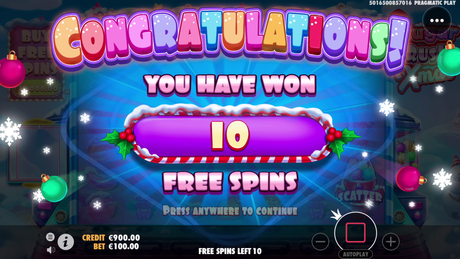
Three scatters award 10 Free Spins, while four, five, six and seven scatters award 12, 15, 20 and 30 respectively. Further scatters can retrigger the feature and add more spins. During this round, the retention of marked positions gives the multiplier mechanic more time to develop than it normally receives in the base game.
That structure makes the game appealing to players who enjoy feature-driven play rather than a steady sequence of small line wins. It also creates a high-volatility profile according to the New Zealand-facing material supplied for this game, although the provider’s own game information does not state a volatility rating. High volatility generally means results may be uneven, with longer quiet periods possible and larger outcomes less frequent. It should not be treated as a forecast.
A Bonus Buy may also be shown on some platforms, reportedly at 100× the current bet, with a random number of scatters and at least three awarded. Availability can depend on the operator or jurisdiction, so it is not a universal feature. It is also a paid game mechanic, not a casino promotion. Similarly, the in-game Free Spins round should not be confused with free spins offered as part of a separate marketing campaign, whose conditions are set by the hosting operator.
Which figures should be checked before playing?
The commonly listed theoretical RTP is 96.50%, but operators may use lower configurations, including 95.50% or 94.50%. RTP is a long-run mathematical measure, not a promise for an individual session. The active setting matters, so the most useful place to verify it is the game’s information or paytable screen before staking money.
The title is not a progressive jackpot game, and the advertised maximum win is 5,000× the stake. Its regular symbol awards can reportedly reach up to 150× the stake for larger groups, while multipliers may affect qualifying wins involving marked positions. These figures describe the game’s stated mathematical structure; they do not indicate how often any particular award will occur or guarantee that a session will approach the maximum.
Players comparing it with other slots should also avoid relying only on the headline maximum. Check the grid format, minimum cluster size, RTP configuration, stated volatility information and the way multipliers operate. If a platform displays different settings from those expected, the operator’s current paytable should take priority. For broader information about gambling in New Zealand, the Department of Internal Affairs gambling information is a suitable public reference, but it does not confirm the specifications of any individual game.
How can you compare similar games fairly?
Start by separating games that share a sweet-themed name from games that actually share the same mechanics. Related titles such as Sugar Rush Xmas, Sugar Rush 1000 and Sugar Rush Super Scatter are separate releases, so their reels or grids, RTP settings, bonus structures and maximum wins may differ. A similar title should never be assumed to have identical rules.
Next, compare the way a game creates and develops wins. A cluster-pays title may suit someone who enjoys tumbling grids and evolving positions, while a fixed-payline game may be easier to read at a glance. Neither format removes chance. Short demo play can help with navigation and show how the interface behaves, but it cannot verify RTP, establish volatility or demonstrate what a typical long-term result will be.
Finally, distinguish the game supplier from the casino operator. The supplier provides the software, while the operator controls account checks, cashier arrangements, available promotions and any account-level controls. Mobile access may be available through a compatible casino browser, with landscape orientation potentially making the grid easier to view, but that does not prove a dedicated app exists. Confirm platform details, active rules and any available play controls with the operator before making a decision.
Frequently asked questions
Is this a conventional paylines slot?
No. It uses a 7×7 cluster-pays grid, where groups of at least five matching symbols connect horizontally or vertically. Winning symbols disappear and are replaced during cascades. The layout therefore differs from a conventional reels game that checks a fixed set of paylines after each spin.
Can the multiplier remain after a normal spin?
No. In the base game, marked positions clear when the spin’s tumble sequence ends. During Free Spins, marked positions and their multipliers can remain for the feature and continue increasing. This difference is central to how the bonus round changes the game’s multiplier potential.
Does the game itself provide an account or cashier?
No. The game is software supplied for casinos and does not register players, process deposits or handle withdrawals. Account creation, identity checks, payment methods, support and any responsible-gambling controls belong to the operator hosting it. Its own information screen is limited to game rules and settings.